Most anglers can tell you a story about a fish that got away.
Sometimes it was a pulled hook. Sometimes the drag was set wrong. Sometimes the fish simply won the battle fair and square.
But every now and then, the culprit is much less glamorous.
A crimp fails.
The frustrating thing is that crimp failures are usually preventable. In fact, many of the problems we see aren’t caused by poor-quality tackle at all. They’re caused by small mistakes during the rigging process that only become apparent when a large fish starts applying serious pressure.
The trouble with crimps is that they often look fine until they’re tested properly. A poorly made connection might survive countless casts, hours of trolling and even smaller fish. Then the moment a powerful tuna, shark or billfish gets involved, the weakness reveals itself.
That’s why taking the time to crimp correctly is one of the most important skills any serious angler can learn.
Why Crimping Matters
In big game fishing, knots aren’t always the best solution.
As leader strengths increase, tying reliable knots becomes more difficult. Heavy monofilament and fluorocarbon can be challenging to knot consistently, which is why crimped connections have become the standard for many offshore and big game applications.
A properly made crimp creates a strong, reliable connection that maintains a high percentage of the line’s breaking strain. When done correctly, it’s a simple and highly effective system.
The problem is that “properly” is doing a lot of work in that sentence.
Crimping isn’t difficult, but it does require attention to detail.
Choosing The Correct Crimp Size
One of the most common mistakes we see is anglers using the wrong size crimp.
It might seem obvious, but many rigging failures start before the crimping tool even comes out of the tackle box.
If the crimp is too large, the leader may slip under pressure. If it’s too small, the material can become damaged during assembly or compression.
A good crimp should allow the leader to pass through cleanly while still providing enough grip once compressed. Different leader materials and diameters require different crimp sizes, so it’s worth taking the time to match the components correctly.
Trying to make an unsuitable crimp work is rarely worth the risk.
The Danger Of Over-Crimping
This is probably the most common mistake of all.
Many anglers assume that squeezing harder creates a stronger connection.
Unfortunately, that’s not how it works.
When a crimp is compressed too aggressively, it can damage the leader material inside. Monofilament and fluorocarbon may become weakened, flattened or even partially cut. The connection might look secure, but you’ve effectively created a weak point.
It’s a bit like overtightening a bolt. More pressure isn’t always better.
A properly compressed crimp should secure the leader firmly without crushing it unnecessarily. The goal is controlled compression, not brute force.
Under-Crimping Creates Problems Too
Of course, the opposite problem exists as well.
A crimp that hasn’t been compressed sufficiently may not grip the leader properly. Everything can appear secure while you’re rigging, only for the connection to slip once significant load is applied.
This is why consistency matters.
Good crimping is about applying the right amount of pressure every time. Not too much. Not too little.
Like many aspects of fishing, experience helps, but careful attention and quality tools make a huge difference.
Using The Right Crimping Tool
We’ve all been tempted to make do with whatever happens to be lying around.
Pliers are handy. Multi-tools are convenient. Sometimes the urge to improvise can be strong when you’re eager to get back on the water.
The trouble is that crimps are designed to be compressed using purpose-built tools.
Dedicated crimping tools are engineered to apply pressure evenly and consistently. They help create the correct shape while reducing the risk of damaging either the crimp or the leader material.
A quality crimping tool may not be the most exciting purchase you’ll ever make, but it’s one of those pieces of equipment that quietly earns its place in the tackle bag.
Leaving The Correct Loop Size
Another common mistake involves the size of the loop itself.
Sometimes anglers create loops that are far too tight around swivels, hooks or rings. At first glance it can look neat and tidy, but it restricts movement and places additional stress on the connection.
A little freedom of movement is important.
The loop should be large enough to allow natural articulation without creating excessive slack. Finding that balance helps reduce wear and allows the rig to perform as intended.
Like many things in fishing, neatness isn’t always the same as effectiveness.
Don’t Forget About Chafe Protection
Big fish are incredibly good at finding weaknesses.
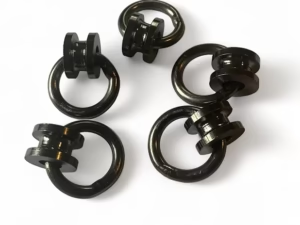
Leader material rubbing against metal components, swivels or lure hardware can gradually suffer damage during a fight.
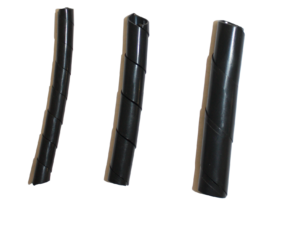
This is why many anglers incorporate chafe tubing into their rigs.
The tubing provides an additional layer of protection in areas where friction is likely to occur. It’s a simple addition that can dramatically improve durability, particularly when targeting hard-fighting species capable of prolonged battles.
Considering the relatively small investment involved, it’s often a sensible precaution.
Inspect Every Crimp Before Fishing
One habit that separates experienced anglers from everyone else is inspection.
Before a rig goes anywhere near the water, every crimp should be checked carefully.
Look for sharp edges. Check for signs of uneven compression. Ensure the leader isn’t visibly damaged. Confirm that the connection moves as intended and that all components are seated correctly.
It only takes a few moments.
The alternative is discovering a problem halfway through the fight of a lifetime.
Practice Before It Matters
One of the best pieces of advice we can offer is to practise crimping at home.
The garage, workshop or kitchen table is a far better place to learn than the deck of a moving boat in rough weather.
Spend some time experimenting with different leader materials, crimps and tools. Test your finished connections. Pull on them. See what works and what doesn’t.
The confidence that comes from knowing your rigs are properly assembled is invaluable when you’re facing powerful fish.
And when something does go wrong, you’ll have a much better understanding of why.
Quality Components Make A Difference
Even perfect technique has its limits.
A correctly assembled connection still relies on quality components throughout the system. Inferior crimps, damaged sleeves or unsuitable leader materials can create problems regardless of how carefully they’re assembled.
That’s why we always recommend investing in reliable rigging components from trusted manufacturers.
When you’re targeting fish capable of testing every part of your tackle, cutting corners rarely pays off.
Small Details, Big Consequences
One thing we’ve learned over the years is that big game fishing often comes down to surprisingly small details.
A crimp only occupies a tiny part of the rig, yet it can determine the outcome of an entire day’s fishing.
Most anglers are happy to spend time researching rods, reels and electronics. Yet some of the most important decisions happen during the rigging process.
Taking a little extra care when crimping may not feel particularly exciting. It won’t generate dramatic photographs or stories in the marina afterwards.
What it can do is help ensure that when the fish you’ve been waiting for finally appears, your tackle is ready for the challenge.
And that’s what really matters.
At Leadertec, we’re passionate about helping anglers build reliable, dependable rigs that perform when it counts. From quality crimps and leader materials to specialist rigging accessories, having the right components is the first step towards fishing with confidence.
 BAIT AND LURE RIGGING ACCESSORIES
 BOAT FISHING ACCESSORIES
 BOAT FISHING ACCESSORIES
 BOAT FISHING ACCESSORIES
 BOAT FISHING ACCESSORIES
 BAIT AND LURE RIGGING ACCESSORIES
 BAIT AND LURE RIGGING ACCESSORIES
 BAIT AND LURE RIGGING ACCESSORIES
 ANTI CHAFE GEAR