When anglers talk about big game tackle, the conversation usually starts with rods and reels.
Understandably so. They’re the exciting bits. They’re the pieces of kit everyone notices first when they step aboard a boat.
Hooks, on the other hand, tend to get far less attention.
Which is slightly odd when you think about it.
After all, when a shark, tuna or marlin takes your bait, the hook is the only thing actually connected to the fish.
You can have the best reel money can buy, the strongest leader available and enough drag pressure to stop a small car, but if the hook isn’t right for the job, none of that matters.
Over the years, we’ve seen anglers spend hundreds on premium tackle and then cut corners on hooks. We’ve also seen anglers lose exceptional fish because they simply chose the wrong pattern for the species they were targeting.
The good news is that hook selection doesn’t need to be complicated. Once you understand a few key principles, choosing the right hook becomes much easier.
Why Hook Choice Matters More Than You Think
Big game fish place enormous pressure on tackle.
Unlike smaller species, these fish aren’t simply hooked and landed a few minutes later. Battles can last for extended periods, placing constant stress on every component in the system.
A hook has several jobs to perform.
First, it needs to penetrate effectively. Then it needs to remain securely in place throughout the fight. Finally, it needs to withstand huge forces without bending, opening or breaking.
Different species create different challenges.
A tuna’s blistering runs place immense strain on the connection. Sharks can expose tackle to abrasion and twisting forces. Marlin often leap repeatedly, creating sudden changes in tension that test every part of the rig.
Choosing the correct hook helps ensure you’re prepared for these challenges.
Understanding Hook Patterns
One of the most common mistakes we see is anglers assuming that bigger automatically means better.
In reality, hook pattern is often just as important as hook size.
Several hook styles are widely used in big game fishing, each designed for specific situations.
The two most common are J-hooks and circle hooks.
Both have their place, but they work very differently.
Understanding these differences is often the first step towards improving your success rate.
Circle Hooks For Sharks And Tuna
Over the last couple of decades, circle hooks have become increasingly popular throughout the big game fishing world.
There’s a good reason for that.
When used correctly, circle hooks tend to hook fish in the corner of the mouth rather than deep inside the throat. This makes them an excellent option for catch-and-release fishing and often results in secure hook holds.
The first time many anglers use a circle hook, they think something has gone wrong.
The fish takes the bait, the rod bends over and instinct says, “Strike!”
That’s exactly what you shouldn’t do.
Circle hooks are designed to rotate naturally into position as pressure comes onto the line. Aggressive striking can actually pull the hook away from the fish before it has a chance to set properly.
Once anglers learn to trust the process, they’re often surprised by just how effective circle hooks can be.
For many shark and tuna applications, they’re now considered the preferred option.
When J-Hooks Still Have A Place
Despite the popularity of circle hooks, J-hooks haven’t disappeared.
Far from it.
They remain an important part of many big game anglers’ tackle boxes and continue to be widely used in certain situations.
Artificial lure fishing is one example.
Many trolling lures are specifically designed around J-hook rigs, particularly when targeting species such as marlin.
The key difference is understanding how the hook is intended to work.
Unlike circle hooks, J-hooks generally rely on a more traditional hook set. They can provide excellent penetration when used correctly and remain a highly effective option in experienced hands.
As with most things in fishing, there isn’t a universal answer.
The best choice depends on the species, technique and local regulations.
Hooks For Shark Fishing
Sharks are unique opponents.
They’re immensely powerful, often unpredictable and capable of placing considerable strain on tackle.
Hook strength is particularly important.
A hook that might perform perfectly well on smaller species can quickly reveal its limitations when connected to a large shark.
Heavy-gauge hooks are generally preferred because they’re designed to resist opening under extreme pressure.
Corrosion resistance is also worth considering, particularly when fishing regularly in saltwater environments.
Many experienced shark anglers favour circle hooks because of their reliable hook placement and suitability for catch-and-release fishing.
Combined with suitable wire traces and strong leader materials, they form an effective and dependable system.
Hooks For Tuna Fishing
Tuna are built differently.
Everything about them is designed for speed and endurance.
A large tuna can accelerate rapidly and maintain incredible power throughout a fight. Hook choice therefore needs to prioritise both strength and penetration.
One challenge with tuna is that they often feed aggressively, especially when baitfish are concentrated.
The hook needs to find purchase quickly and securely.
Circle hooks are widely used when fishing natural baits for tuna, while specialist hooks designed for trolling and lure fishing remain popular in other situations.
Whatever approach you’re using, sharpness matters.
A hook can be strong enough to stop a submarine, but if it doesn’t penetrate properly in the first place, strength becomes irrelevant.
Hooks For Marlin Fishing
Few fish capture the imagination quite like marlin.
They’re fast, spectacular and capable of producing some of the most memorable moments in sport fishing.
They’re also notorious for throwing hooks.
Anyone who has spent time targeting marlin will have experienced the frustration of seeing a fish leap repeatedly before suddenly coming free.
This is where hook selection becomes particularly important.
Many marlin anglers use specialised trolling hook rigs designed to maximise hook-up rates while maintaining secure holds throughout prolonged fights.
Rigging position, hook alignment and lure presentation all play a role.
The hook itself is only one piece of the puzzle, but it’s an important piece.
Choosing quality components and ensuring they’re rigged correctly can significantly improve your chances when opportunities arise.
Sharpness Is Non-Negotiable
One lesson that applies to every species is this:
Sharp hooks catch more fish.
It sounds obvious, but you’d be surprised how often anglers overlook it.
Hooks can become damaged during storage, transport or previous trips. Even premium hooks should be inspected regularly.
If a point isn’t perfectly sharp, address it before fishing.
Large fish don’t provide many opportunities.
When the chance comes, your tackle needs to be ready.
Don’t Ignore The Rest Of The Rig
A hook doesn’t operate in isolation.
The strongest hook in the world won’t compensate for poor rigging.
Leader materials, crimps, swivels and knots all influence performance. Every component needs to work together as part of a complete system.
We’ve spoken before about the importance of reliable rigs, and hooks are a major part of that equation.
Getting the hook right is essential, but it should always be viewed as one element of the bigger picture.
Buy Quality And Fish With Confidence
One thing we’ve learned over the years is that tackle failures rarely happen at convenient times.
They don’t happen when you’re testing a rig in the garage.
They happen when a fish of a lifetime is heading away from the boat at full speed.
That’s why quality matters.
Investing in proven big game hooks from reputable manufacturers helps remove unnecessary variables and gives you confidence in your setup.
Confidence might not appear on a tackle specification sheet, but it counts for a lot when the pressure is on.
Final Thoughts
Choosing the right hook for sharks, tuna and marlin isn’t about finding one perfect option that works in every situation.
Different species, techniques and fishing conditions all require slightly different approaches.
The important thing is understanding what you’re asking the hook to do.
Consider the species you’re targeting. Think about the presentation you’re using. Match the hook pattern to the application. Prioritise quality and sharpness.
Most importantly, don’t underestimate the importance of this small but critical piece of tackle.
Because when that dream fish finally arrives, everything ultimately comes down to a single point of steel.
At Leadertec, we stock a wide range of premium big game hooks and rigging components designed to perform in demanding offshore conditions. Whether you’re targeting sharks, tuna or marlin, choosing the right tackle starts with building a rig you can trust.
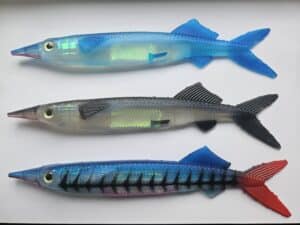 BAIT AND LURE RIGGING ACCESSORIES
 BOAT FISHING ACCESSORIES
 BOAT FISHING ACCESSORIES
 BOAT FISHING ACCESSORIES
 BOAT FISHING ACCESSORIES
 BAIT AND LURE RIGGING ACCESSORIES
 BAIT AND LURE RIGGING ACCESSORIES
 BAIT AND LURE RIGGING ACCESSORIES
 ANTI CHAFE GEAR